
Lord Thornton
When one man fooled the people of Perth.

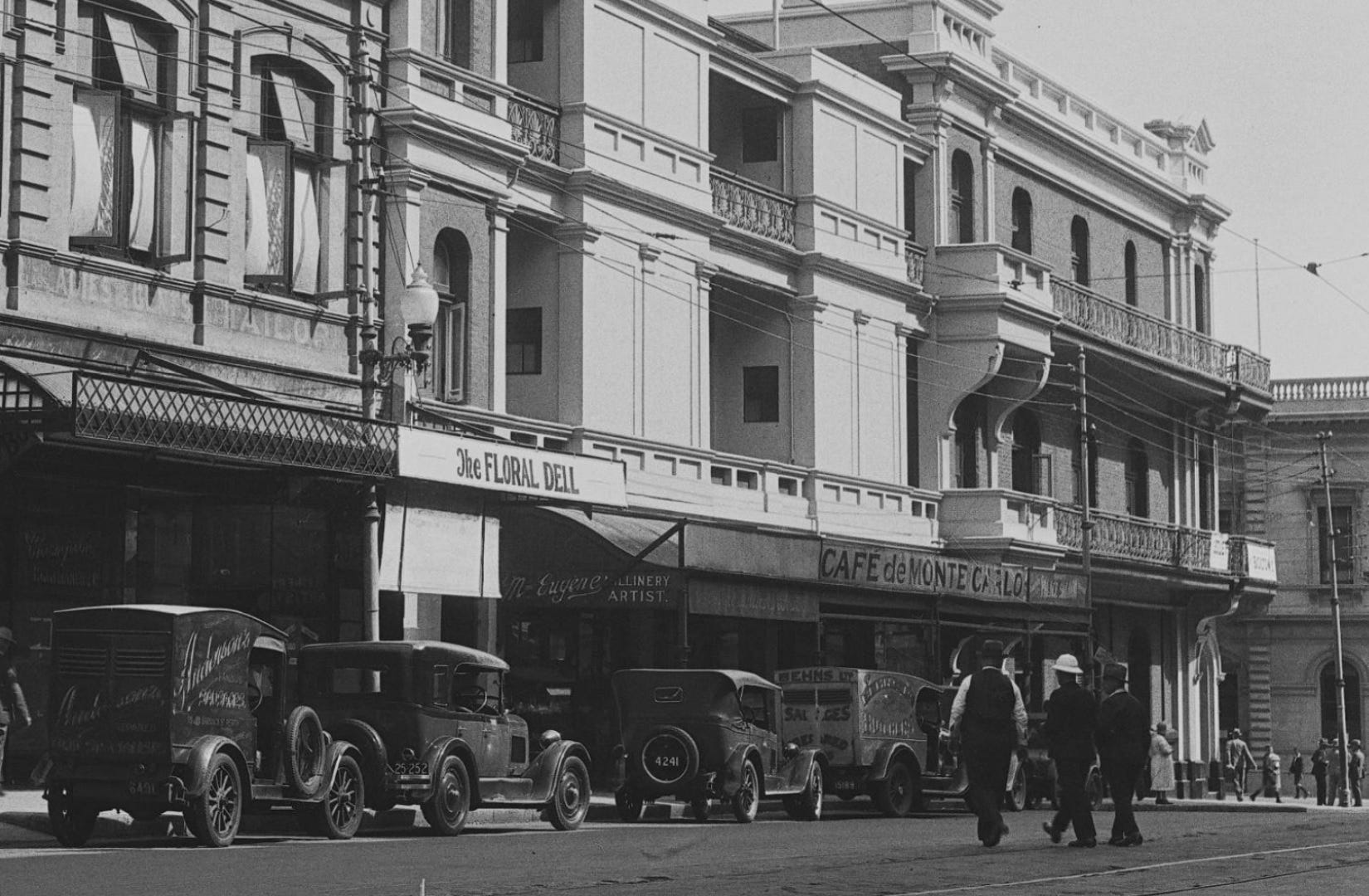
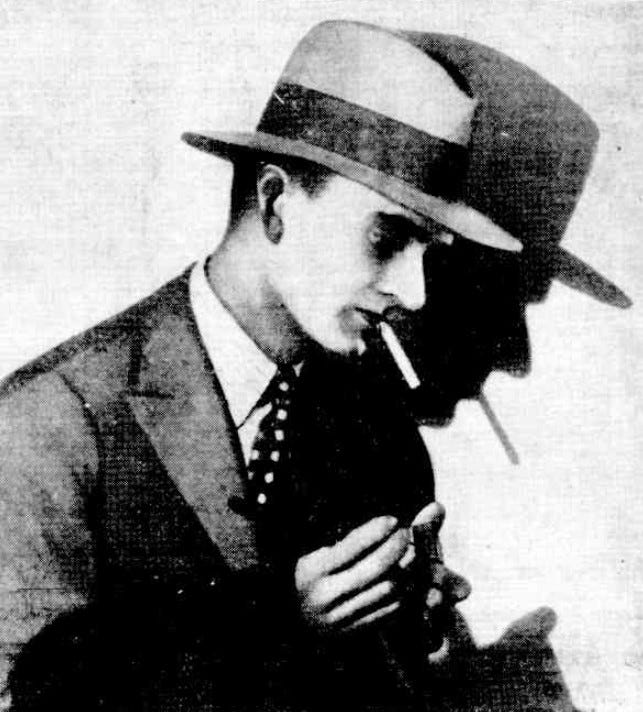
In a city like Perth, the rumours about the waiter at the Cafe de Monte Carlo spread quickly. He was not who people thought he was. He was certainly not a waiter. Oh, no. That was all a ruse. Max Maxwell was the son of an Earl, and his real name was Captain the Honourable Maxwell E. Thornton. Lord Thornton was in Perth, but, please, just call him Max.
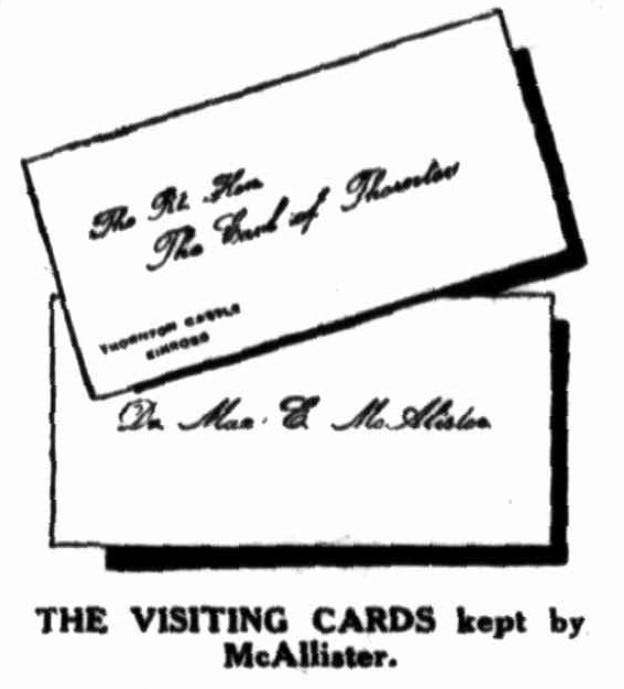
With his identity unmasked in late 1931, Max had visiting cards printed and was soon introduced to the who’s who of Perth society. He relished the opportunity to share his sad story. He was the son of the Earl of Thornton of Thornton Castle, located in Milnathort, Scotland. His mother was a French marchioness and a Roman Catholic. His father was a “stern, unrelenting Protestant.” Their differing religions resulted in arguments, and Max’s mother left, taking her children with her.
Despite leaving her husband, the Countess had property of her own in France. Max’s father may have disinherited him, but surely his mother had something to give. Alas, she did not. The Earl (or, as he called him, ‘the old man’) was also determined to prevent Max from accessing his mother’s estate. Max’s only option was the law. He claimed that his father was not mentally capable of administering the estate, and if he succeeded in proving that fact, he would assume the title of the Earl of Thornton. While in Perth, he consulted with two King’s Counsel, one of whom drew up a deed of trust. Max was prepared for the most important legal battle of his life.
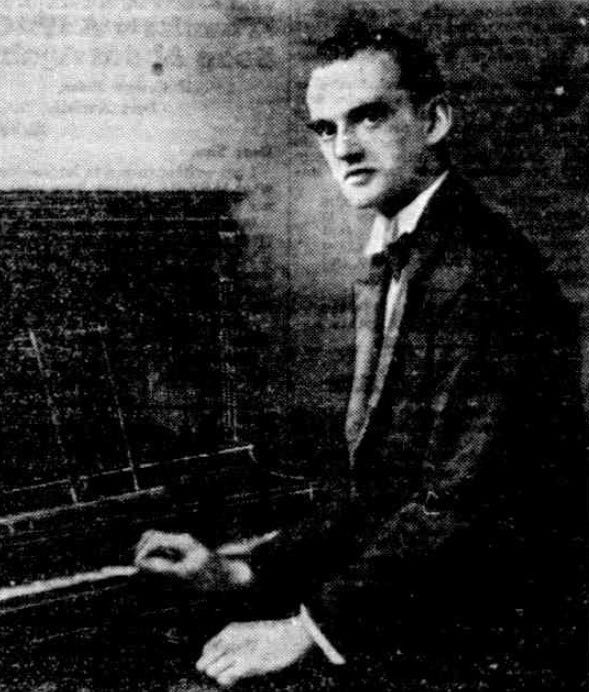
As Max continued with life in Perth, his story and his connections grew. He often mentioned Sir Philip Sassoon, who was married to his sister, Mabel. He also claimed his other sister was Beatrice Harraden, the British writer. He was good friends with Prince Edward, and travelled with him as his personal pianist. At the end of the trip, the Prince gave him a gold watch engraved with the letters ‘E.P.’, which Max presented to anyone who was sceptical about the story. He also drew the attention of Clara Butt when he watched her sing in Albert Hall. He was there as part of the French secret service, and when Clara took to the stage, she looked up, recognised him (he is a talented piano player, after all) and gestured at him to come down to play for her.
Not everyone was convinced. Some people in Perth scoffed at Max’s rather exorbitant claims. They dragged out their copy of Debrett’s Peerage and flicked through the pages. There was no Earl of Thornton. Next came Burke’s Peerage. Then, Who’s Who. Still, no Earl of Thornton! They confronted Max, but he had an explanation. His father, you see, hated publicity. He travelled incognito and had managed to convince the publishers of Debrett’s to leave him and his details out of the book.
Questions persisted. Why in the world would a man with such connections work as a waiter? In response to one person, he explained he had a nervous disorder that he contracted during the war, and working as a waiter (in his words) required no mental effort and provided him with physical activity. On another day, he simply stated, “A man must live somehow.”
Convinced, the people of Perth fell under his spell. He was a popular guest, and was regularly invited to all the best homes. One family welcomed him into their home for an extended stay. He became comfortable around them and allowed them to see his personal correspondence from a Melbourne solicitor. In one instance, they saw a note stating that his investments totalled £69,000. If that was not convincing enough, all the notes were written on the Melbourne solicitor’s notepaper.
Max loved to tell a story. If it was not about the people he knew, then it was about his vast property. He had a home in Melbourne, a home in Sydney, and a home in Brisbane. He drove a Packard car, spent money freely, and loved to give flowers to women of his acquaintance. He was adept at playing the piano, which only added to his charm. He enjoyed Perth, and Perth enjoyed having a member of the aristocracy in their midst.
His departure, when he announced it, came out of the blue. He had heard from his solicitors in Melbourne. He had to return immediately. Accompanied by a Perth man, they sailed on the Manunda on March 10. Once they arrived, Max left to go downtown and simply vanished.
When word got back to Perth, everyone began comparing notes. Quite a few people lent him money as he was always complaining that the solicitors were not advancing him money from the estate. One family lent him £120. Another man lost a ring and a watch that Max had ‘borrowed.’ They questioned the Melbourne solicitors. They had never heard of him, and they had no idea how he came to have their notepaper.
The victims recounted the stories (endless stories) that he told them about who he was, where he was from, and his vast property and wealth. On top of that, there were the promises. He promised one man £750 a year to work as his private secretary in Perth (luckily, the man refused). He employed another man to work as a manager of his bloodstock farm in the south-west (despite not having any land to speak of). He expressed a desire to send the man he travelled with on the Manunda (a proficient violinist) to Germany to learn from violin masters. He befriended young people and filled their heads with hopes, dreams, and promises of money.
Like a leech, he attached himself to people of notoriety or wealth and convinced them that he belonged in their world. The Mirror, when they published an exposé about him on 21 May 1932, had two questions: “Who is Max Maxwell? Where is Max Maxwell?” They then assumed that “obviously he was a man of education and even had signs of breeding.”
It can certainly be said that nobody has ever put it over Perth society as completely and cleverly as he.
A week later, the stories continued, but Perth was none the wiser as to who Lord Thornton was. Despite rumours he was spotted in Sydney, revelations would not occur for another year.
On 11 April 1933, the New South Wales police charged Max McAllister with false pretences and refusing to pay for accommodation. The story was a familiar one. He was staying at the Newcastle Hotel in Sydney when he shared with the licensees, John and Isobel Dorrington, that he was actually the Earl of Thornton and he was using the alias Dr Max McAllister to hide his identity. He showered Mrs Dorrington with gifts and borrowed money off them. He never paid board, never paid any of the money back, and disappeared. Police tracked him down, and on 18 April, he was found guilty of all charges and was sentenced to eight months imprisonment.
The news reached the Western Australian newspaper, ‘Mirror,’ a month later. They gleefully retold the story of how Max “pulled Perth’s society’s leg so completely and then faded off in style.” No one in Perth talked much about it. Perhaps they were embarrassed that a person putting on airs and graces was able to fool them so easily. There was also no police report. Embarrassment may have again played a part, but we should question the ‘Mirror’s’ claims. Perhaps the loss was not that significant. Nevertheless, despite the lack of criminal charges in Western Australia, Max Maxwell, was indeed a real person, albeit with a fake identity.
Although satisfied he was behind bars, the ‘Mirror’ was unable to answer one important question: who was Max Maxwell? Max Maxwell, also known as Lord Thornton, was a serial scammer. He had at least twenty aliases, several of which were aristocratic titles. He was Baron Kinross, the Earl of England, the Earl of Faulkner, and the Earl of Cassilis. He ran as an Independent in the 1920 Victoria state election. He posed as a doctor who specialised in psychology. During WWII, he enlisted in the Australian Military Forces at least four times, lying about his age, before being discharged for “having been convicted by a civil court before enlistment.” More often than not, he went by the name Max or Maxwell, but he was also Cyril, Charles, Ernest, Pierre, or Macalister. Far from aristocratic, he was born Charles Ernest Macalister Smith on 28 April 1899 in Malvern, Victoria.
While we know who Max was, I think the more pertinent question is, why did he act the way that he did? In 1947, he claimed that the reason for his behaviour was that he was a drug addict. His criminal activity started in 1916 and continued in various places into the 1950s. In 1954, a reporter for the newspaper ‘Truth’ (NSW) confronted him on the street. Max had been moving among Sydney music circles and was claiming he had a doctorate in music. When the truth of his identity was revealed, the reporter asked him, “Can’t you give any explanation why you do this kind of thing?” Max responded in what may have been the few times he was honest, “It’s been going on for a long time.”
Pledge Your Support
Researching and writing stories for The Dusty Box is a labour of love. Unfortunately, it can also be a costly labour of love. While I will always endeavour to have free stories available (history, after all, should be for everyone) if you have the means to do so, please consider becoming a paid subscriber. It’s $50 for a year - a bargain that equates to just over $4 a month (coffee isn’t even that cheap anymore!). To pledge your support, tap the button below.
Sources:
State Library of Western Australia; The Floral Dell and Cafe de Monte Carlo on William Street Perth, January 1932 [picture]; Call number: 046699PD
1932, Mirror (Perth, WA : 1921 - 1956), 21 May, p. 5. , viewed 04 Mar 2025, http://nla.gov.au/nla.news-page7369804
1932 'More About Perth's Prize Tale-Teller', Mirror (Perth, WA : 1921 - 1956), 28 May, p. 8. , viewed 27 Feb 2025, http://nla.gov.au/nla.news-article75619842
1933 'POLICE COURTS.', The Sydney Morning Herald (NSW : 1842 - 1954), 12 April, p. 12. , viewed 05 Mar 2025, http://nla.gov.au/nla.news-article16975219
1933 'POLICE COURTS.', The Sydney Morning Herald (NSW : 1842 - 1954), 19 April, p. 8. , viewed 05 Mar 2025, http://nla.gov.au/nla.news-article16961744
1933 'BLATANT CHEEK OF SELF-STYLED EARL', Truth (Sydney, NSW : 1894 - 1954), 23 April, p. 12. , viewed 05 Mar 2025, http://nla.gov.au/nla.news-article169311727
1933 '"Lord Thornton" Bobs Up Again!', Mirror (Perth, WA : 1921 - 1956), 20 May, p. 8. , viewed 06 Mar 2025, http://nla.gov.au/nla.news-article75503954
1954 'MUSICAL MAX WOULDN'T HAVE A BAR OF TRUTH', Truth (Sydney, NSW : 1894 - 1954), 2 May, p. 7. , viewed 06 Mar 2025, http://nla.gov.au/nla.news-article172057406
1947 ''Baron' Gets Two Years', The Sun (Sydney, NSW : 1910 - 1954), 23 July, p. 3. (LATE FINAL EXTRA), viewed 06 Mar 2025, http://nla.gov.au/nla.news-article229703057
1899 'Family Notices', The Argus (Melbourne, Vic. : 1848 - 1957), 13 May, p. 5. , viewed 06 Mar 2025, http://nla.gov.au/nla.news-article9525165
That was very Interesting 🧐🥰
What a great story!